
How Long Does a Boiler Service Take? A Complete Guide for UK Landlords
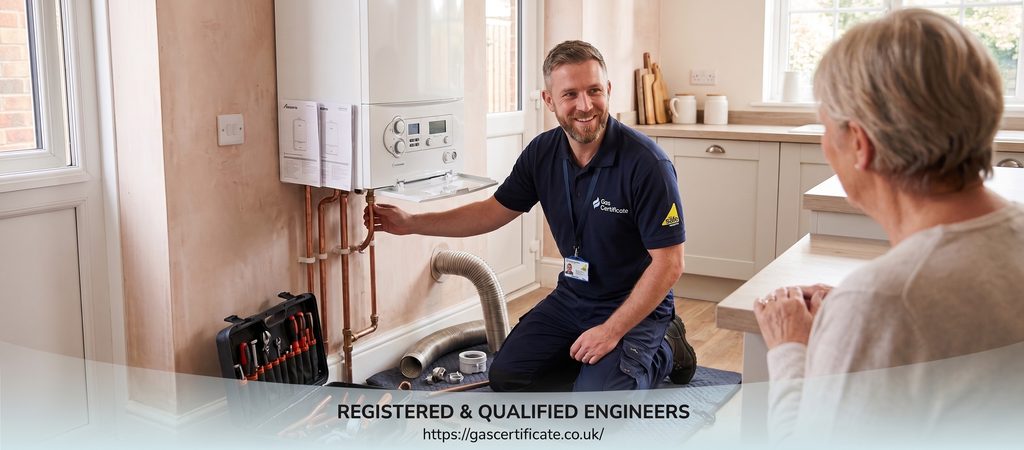
If you own a rental property in the UK, keeping the boiler in good working order is an important part of maintaining a safe and comfortable home for your tenants. But before arranging an appointment, you may want to know how long a boiler service takes, how much it costs, what the engineer will check, and whether you can combine it with your annual gas safety check.
A typical boiler service takes around 45–60 minutes, although the appointment may take longer if the boiler is older, difficult to access or has an existing fault. The exact time depends on the boiler model, its condition and the work required.
For landlords, there is another important consideration: a routine boiler service is not the same as a landlord gas safety check. Understanding the difference helps you plan maintenance, manage costs and meet your legal responsibilities.
In this guide, we explain what UK landlords need to know before booking a boiler service, including expected timings, common delays, preparation tips and the relevant gas safety requirements.
Key Takeaways
- Typical duration: Allow around 45–60 minutes for a straightforward boiler service.
- Older boilers: Some systems need 60–90 minutes or longer, depending on their condition and complexity.
- Annual maintenance: Regular servicing helps identify developing problems and maintain reliable heating.
- Legal responsibilities: Landlords must arrange the required annual gas safety check for relevant gas appliances and flues in their rental properties.
- Different paperwork: A boiler service report and a Landlord Gas Safety Record (CP12) serve different purposes.
- Reduce delays: Provide clear access to the boiler and tell the engineer about any known problems before the appointment.
How Long Does a Boiler Service Take?
Most routine boiler services take approximately 45–60 minutes. However, there is no fixed duration that applies to every property.
A modern boiler in good condition may require less time than an older appliance that needs additional inspection or cleaning. The engineer may also need longer if access is restricted or a fault requires further investigation.
Here is a general guide to help you plan your appointment.
| Boiler or appointment type | Approximate time |
|---|---|
| Straightforward service on a modern combi boiler | 30–60 minutes |
| System boiler | Around 45–75 minutes |
| Conventional or older boiler system | Around 60–90 minutes or longer |
| Service involving additional fault diagnosis | Depends on the problem |
| Service requiring repairs or replacement parts | May require extra time or another visit |
These are planning estimates, not guaranteed appointment lengths. The actual duration depends on the appliance, the manufacturer’s servicing instructions and the engineer’s findings.
Why Does Boiler Type Affect Servicing Time?
Different boiler systems have different components and installation arrangements.
A combi boiler provides heating and hot water directly from one unit. A system boiler works with a separate hot water cylinder, while a conventional boiler usually operates with additional storage tanks and associated pipework.
The engineer’s main task is to service the boiler in accordance with the manufacturer’s instructions. The wider system’s design, the condition of its components and the accessibility of the installation can affect how long this takes.
If you manage several rental properties, avoid assuming that every boiler can be serviced within the same appointment window. Ask your provider for a realistic estimate based on each appliance.
What Happens During a Boiler Service?
Understanding the work involved helps landlords judge whether an appointment has been planned properly.
A professional service is more than a quick visual inspection. The engineer follows the relevant manufacturer’s instructions and checks the boiler’s condition and operation.
1. Initial Inspection
The engineer examines the boiler and its accessible components for visible damage, corrosion, leaks or other signs of deterioration.
They may also ask about the boiler’s service history and any problems reported by the tenant, such as unusual noises, inconsistent heating or changes in hot water performance.
This initial assessment helps identify areas that need closer attention.
2. Internal Component Checks
Where required by the manufacturer’s instructions, the engineer inspects internal components and cleans them if necessary.
The work may include examining the burner, heat exchanger, seals and other relevant parts. The precise procedure varies by boiler model.
Cleaning is not necessarily the same for every service. The engineer should follow the appliance manufacturer’s guidance rather than carry out unnecessary work.
3. Combustion and Flue Checks
The engineer assesses relevant combustion performance and checks that the flue arrangements are safe and operating correctly.
The flue carries combustion products away from the property. Its condition and safe operation are important because faults can create serious risks.
The engineer also considers ventilation and other safety requirements relevant to the installation.
4. Controls and Operating Checks
The engineer checks relevant controls and safety devices and observes the boiler’s operation.
They may examine pressure readings, operating performance and other model-specific requirements. If something appears abnormal, additional investigation may be necessary.
5. Final Checks and Service Report
After completing the required work, the engineer checks the boiler’s operation and records the findings.
You should receive a service report or other appropriate maintenance documentation describing the work completed and any issues identified.
If the engineer finds a fault, ask for a clear explanation of its seriousness, the recommended action and any additional costs before authorising non-emergency repairs.
Is a Boiler Service a Legal Requirement for UK Landlords?
This is one of the most important questions to understand before booking.
UK landlords have a legal duty to arrange an annual gas safety check for relevant gas appliances and flues, but this is not the same as a blanket legal requirement to service every boiler annually.
Under the Gas Safety (Installation and Use) Regulations 1998, landlords must ensure that relevant gas appliances, fittings and flues are maintained in a safe condition. They must also arrange the required gas safety checks through a suitably qualified, Gas Safe registered engineer.
The Health and Safety Executive recommends that gas appliances and flues are serviced in accordance with the manufacturer’s instructions. If those instructions are unavailable, annual servicing is recommended unless the Gas Safe registered engineer advises otherwise.
For landlords, this means two separate responsibilities need attention:
- Gas safety compliance: Arrange the legally required gas safety check and retain the appropriate record.
- Boiler maintenance: Maintain the boiler properly, following the manufacturer’s instructions and addressing faults when necessary.
You can read the official guidance from the Health and Safety Executive (HSE).
How Often Must Landlords Arrange a Gas Safety Check?
Landlords must generally arrange a gas safety check every 12 months for the relevant appliances and flues covered by their legal responsibilities.
The check must be carried out by a Gas Safe registered engineer. A record must be retained, and a copy must be provided to existing tenants within 28 days of the check. New tenants must receive the relevant record before they move in.
In England and Wales, the regulations also allow a check to be carried out up to two months before its due date without changing the original deadline for the next annual check, provided the conditions of the regulations are met.
For a property with several gas appliances, make sure the inspection covers all relevant appliances and flues, not just the boiler.
Official guidance is available on the HSE’s landlord gas safety FAQ page.
Boiler Service vs Gas Safety Certificate (CP12): What’s the Difference?
Landlords sometimes assume that booking a boiler service automatically fulfils their gas safety obligations. This can leave gaps in their maintenance and compliance arrangements.
Although both appointments involve gas safety considerations, their purposes differ.
| Boiler service | Landlord gas safety check |
|---|---|
| Focuses on maintaining the boiler and checking its condition and operation | Focuses on the required safety checks for relevant gas appliances and flues |
| Follows the manufacturer’s servicing instructions | Follows the applicable gas safety requirements |
| Produces a service report or maintenance record | Produces a Landlord Gas Safety Record, commonly called a CP12 |
| Helps identify wear, maintenance needs and developing faults | Records the outcome of the required gas safety checks |
A boiler service does not automatically replace the required landlord gas safety check. Likewise, a gas safety check does not necessarily provide the maintenance work included in a full boiler service.

Can You Book Both Appointments Together?
Yes. You can ask your provider whether they can complete the boiler service and landlord gas safety check during the same visit.
This can make property management easier by reducing separate appointments and coordinating access with tenants.
However, confirm that the booking explicitly includes both services. Ask whether the quoted price covers the boiler service, the gas safety check and the appropriate paperwork.
Do not assume that a combined booking includes every appliance in the property. Tell the provider about any gas cooker, fire or other relevant appliance that needs to be checked.
How Much Does a Boiler Service Cost in the UK?
The cost depends on the provider, location, boiler type and the work required. There is no single nationwide price that applies to every property.
When comparing quotes, consider the complete service rather than choosing solely on the lowest advertised price.
Ask the provider to clarify:
- Whether the price covers a full boiler service.
- Whether the landlord gas safety check is included or charged separately.
- Whether the appropriate reports or records are included.
- Whether there are additional charges for travel, difficult access or out-of-hours appointments.
- How faults and repairs will be priced if the engineer identifies a problem.
Is a Cheaper Boiler Service Always the Best Choice?
Not necessarily. A lower price may represent good value, but you need to understand exactly what the provider will do.
For example, a quote for a gas safety check alone may not include the maintenance tasks required during a full boiler service.
Compare like-for-like services, check the engineer’s Gas Safe registration and obtain a clear breakdown of any additional charges.
If you manage multiple properties, ask whether the provider offers coordinated appointments or a portfolio maintenance arrangement. These options may simplify administration, although any discount will depend on the provider.
What Can Delay a Boiler Service?
Even when you book a routine appointment, certain issues can extend the visit.
1. Restricted Access to the Boiler
A boiler installed in a crowded cupboard or behind stored items can take longer to access safely.
Clear the surrounding area before the engineer arrives. If the boiler is in a locked cupboard or communal plant room, arrange access in advance.
2. An Older or Poorly Maintained Boiler
Older appliances may show signs of wear, corrosion or component deterioration. Previous maintenance issues can also mean that the engineer needs to investigate further.
The engineer should explain any additional work required rather than treating every issue as part of a standard service.
3. Existing Faults
A boiler that loses pressure, makes unusual noises or struggles to provide hot water may need diagnostic work beyond routine servicing.
A service appointment is not automatically a repair appointment. Some problems can be addressed during the same visit, while others require additional time or replacement parts.
4. Parts That Are Not Available
If a component needs replacing and the engineer does not have the correct part, the repair may require a follow-up visit.
Ask whether the boiler can remain in use safely, what action is needed and when the repair can be completed. The answer depends on the fault and the engineer’s safety assessment.
5. Difficult Installation or Flue Access
Some installations have restricted access to components or flues. If the engineer cannot complete the necessary checks safely, additional arrangements may be needed.
Tell the provider about any unusual installation features when booking so they can plan the appointment appropriately.
How Can Landlords Prepare for a Boiler Service?
A little preparation can help the engineer start promptly and complete the work efficiently.
Before the appointment:
Clear access to the boiler. Remove stored items from the immediate work area and make sure cupboards can be opened.
Arrange access with the tenant. Confirm the appointment time and any entry arrangements. Give the tenant appropriate notice and follow the tenancy agreement and applicable rules.
Share the boiler details. If available, provide the make, model, age and previous service records.
Report known problems. Tell the engineer about recurring pressure loss, unusual noises, inconsistent heating or previous faults.
Confirm the scope of work. Make sure you know whether the booking covers a boiler service, a gas safety check or both.
Ask about additional charges. Find out how the provider will handle repairs, parts and any work outside the original quote.
For landlords with several properties, keep a central record of service dates, gas safety check deadlines, reports and outstanding repairs. This makes future appointments easier to organise.
What Should Landlords Do If the Engineer Finds a Problem?
A service can reveal issues that need attention. The next step depends on the type of fault and whether it affects safe operation.
Ask the engineer to explain:
- What the problem is and how it affects the boiler.
- Whether the appliance is safe to continue using.
- What repair or remedial action is required.
- The estimated cost and whether a second visit is necessary.
- Whether any part of the property needs to remain out of use until the problem is resolved.
If the engineer identifies a safety defect during a landlord gas safety check, the relevant findings must be recorded. The gas safety record should not be withheld until remedial work has been completed. Landlords should arrange the necessary follow-up action and keep the supporting records.
Do not continue using an appliance that the engineer has identified as unsafe. Follow the engineer’s instructions and arrange the necessary remedial work.
Keep copies of the service report, gas safety record, repair invoices and evidence of completed remedial work. These records help you track the property’s maintenance history and demonstrate the actions you have taken.
When Should You Book a Boiler Service for a Rental Property?
The best time to arrange a boiler service is before a problem disrupts heating or hot water, rather than waiting for a breakdown.
Consider booking in advance of colder weather, particularly if your property has an older boiler or a history of faults. You should also check the manufacturer’s servicing recommendations and your maintenance records.
If you manage several rental properties, spread appointments across a planned maintenance schedule rather than leaving everything until the same deadline.
Remember that your annual gas safety check has its own legal timetable. Coordinate the appointments where practical, but make sure neither requirement is overlooked.
Frequently Asked Questions
A straightforward boiler service commonly takes around 45–60 minutes. Older systems, restricted access or additional maintenance can extend the appointment.
It may be possible for a straightforward service on some modern boilers, but the time required depends on the appliance and the manufacturer’s instructions. Do not judge the quality of a service solely by its duration.
There is no blanket statutory requirement that every boiler must receive an annual service. However, landlords must maintain relevant gas appliances, fittings and flues in a safe condition.
The separate annual gas safety check requirement still applies to relevant rented-property gas appliances and flues.
No. A boiler service focuses on maintenance, while a CP12, formally known as a Landlord Gas Safety Record, documents the outcome of the required landlord gas safety check. One does not automatically replace the other.
Yes, provided your provider offers both services and has enough time to complete the required work. Confirm the scope and price before booking.
Yes, you can arrange both in same-day. Confirm the scope and price before booking.
Minor work may sometimes be completed during the appointment, but repairs are not automatically included in the service price. More complex problems may require additional parts, authorisation or another visit.
Keep the service report, invoices, repair records and any relevant maintenance recommendations.
Yes. Landlord gas safety checks and relevant gas work must be carried out by a suitably qualified engineer who is Gas Safe registered for the work involved. You can verify registration through the official Gas Safe Register.
Book Your Boiler Service and Gas Safety Check
Keeping a rental property’s boiler properly maintained helps you plan repairs, reduce avoidable disruption and provide a more reliable heating service for tenants.
Before booking, confirm how long the appointment is expected to take, what the price includes and whether you also need a landlord gas safety check. These simple steps can help you avoid unexpected costs and incomplete compliance arrangements.
At GasCertificate.co.uk, you can explore gas safety and property compliance services for your rental property. Whether you need a boiler service, a landlord gas safety certificate or other property certificates, confirm the scope of work and the documentation included before arranging your appointment.
Plan your next property maintenance appointment early, keep your records organised and address any identified safety issues promptly.
