
CP12 vs Gas Safety Check – Are They the Same?
You’ve seen “CP12” on one website. You’ve seen “gas safety certificate” on another. Somewhere else, it’s called a “gas safety check.” Are these three different things? Do you need all of them?
No. They’re the same thing. But the confusion is common, and it costs landlords time and sometimes money. Let’s clear it up properly.
The Quick Answer
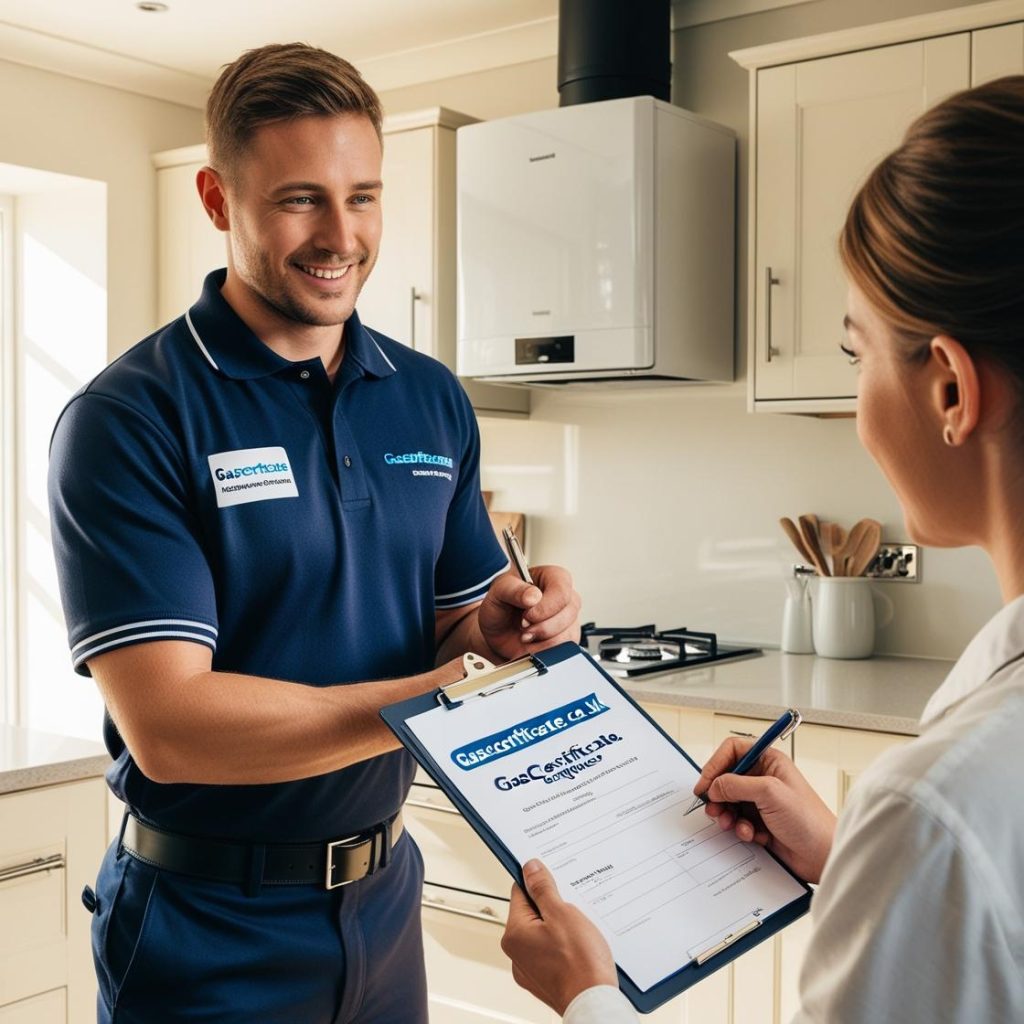
CP12 and gas safety check both point to the same process and the same document. A gas engineer visits your property, tests your gas appliances, and issues a certificate. That certificate used to be called a CP12. Today, it’s officially called a Landlord Gas Safety Record. Most people still say CP12 out of habit. You’re not missing a separate step. You need one check, one certificate, one engineer visit.
What Does CP12 Actually Mean?
CP12 stands for CORGI Proforma 12. CORGI was the UK’s official gas safety body from 1991 to 2009. Every certificate they issued for a landlord gas check ran on a form called Proforma 12. Landlords started calling the certificate by its form number. The name stuck.
What Is a Gas Safety Check?
A gas safety check is the inspection itself. A Gas Safe registered engineer comes to your property and tests every gas appliance. That includes boilers, cookers, gas fires, and any pipework or flues connected to them. The engineer checks gas pressure, ventilation, and whether each appliance burns gas safely. Once the check is done, you get a certificate confirming the result.
So a “gas safety check” is the action. A “CP12” is the paperwork you get afterward. Both terms get used loosely to mean the whole process, which is exactly why people mix them up.
Where the Confusion Comes From
In 2009, the Gas Safe Register took over from CORGI as the UK’s official gas safety regulator. The certificate’s name changed too. It became the Landlord Gas Safety Record, sometimes shortened to Gas Safety Record.
CP12 was never the legal name. It was industry shorthand that landlords, agents, and even some engineers kept using. Sixteen years on, it’s still the most-searched term for this certificate, even though it hasn’t been the official name since CORGI lost its status.
That’s the whole story. No hidden document. No extra requirement. Just an old name that never fully left the room.
| Term | What It Actually Is | Still Valid to Use? |
| CP12 | Old CORGI form name, used informally | Yes, everyone understands it |
| Gas Safety Certificate | Common plain-English term | Yes, widely used |
| Landlord Gas Safety Record | The current official name | Yes, this is the correct legal term |
| Gas Safety Check | The inspection process itself | Yes, refers to the visit, not the paper |
All four rows describe one document and one process. Use whichever term you like — a Gas Safe engineer will know exactly what you mean.
The Check vs The Certificate — A Real Difference
Here’s the one distinction worth knowing. The check is the physical visit and testing. The certificate is the paper (or digital copy) you receive afterward. You can’t have one without the other — a valid certificate only exists because a check took place. But if someone asks “did you get your gas safety check done?” versus “do you have your CP12?”, they’re really asking about the same event from two angles: the process and the proof.
This matters for one practical reason. If your certificate is lost, you don’t need a completely new check — the record often still exists with your provider, and a reissue may be possible if the original inspection is still valid. But if your certificate has expired, no reissue helps. You need a fresh check, appliance by appliance, before a new certificate can be issued.
What’s Included in the Check
- Testing gas pressure on every appliance
- Checking that appliances burn gas correctly
- Inspecting flues and chimneys for safe clearance
- Confirming ventilation and air supply are adequate
- Checking pipework for leaks or damage
- Testing safety devices on each appliance
What’s Printed on the Certificate
- Engineer’s name, Gas Safe ID number, and signature
- Date of the inspection
- Landlord or agent’s name and address
- Property address
- Description and location of each appliance checked
- Result of each check, plus any faults found
- Any remedial work carried out
Who Legally Needs One
Landlords renting out property with gas appliances need one. This applies whether you rent a single flat or manage an HMO with a shared kitchen. Homeowners aren’t legally required to get one, though it’s sensible practice if you want proof your gas appliances are safe.
The legal duty comes from the Gas Safety (Installation and Use) Regulations 1998. It requires an annual check by a Gas Safe registered engineer, and a copy given to tenants within 28 days.
How Often You Need One
Every 12 months, without exception. There’s no grace period. An expired certificate — even by a day — puts you in breach of the regulations. You can book your renewal up to two months before the current certificate runs out, and your original renewal date carries forward. That’s worth doing if you manage several properties and want renewal dates that don’t creep apart over time.
What Happens If You Skip It
Skipping your annual check isn’t a paperwork slip — it’s a breach of the law. Consequences can include fines, invalidated landlord insurance, and difficulty proving compliance if a council or tenant ever raises a complaint. In serious cases involving injury, prosecution is possible. It’s also one of the first documents a letting agent or council officer asks to see.
Common Mistakes Landlords Make With Terminology
Assuming CP12 and gas safety check are two separate bookings. They’re not. Booking either term gets you the same visit.
Searching for a “CP12 renewal” as if it’s a different service from a “gas safety certificate renewal.” Same service, same engineer, same certificate.
Thinking an EICR covers gas appliances. It doesn’t. An EICR checks your electrics. Your CP12 (gas safety certificate) is a separate document for gas only.
Believing a homeowner’s gas check and a landlord’s gas safety check are legally the same thing. They’re not — only rental properties carry the legal annual requirement.
How Much Does It Cost
Pricing depends on how many gas appliances are being tested. A single boiler costs less to check than a boiler, cooker, and gas fire together. Most providers, including us, quote from a starting price and adjust based on appliance count, so ask for a fixed price before booking rather than accepting a vague estimate.
FAQs
Is a CP12 the same as a landlord gas safety certificate?
Yes. Same document, different name for the same thing.
Do I need a CP12 if I already had a gas safety check?
No. The check produces the certificate. You don’t need both separately.
Is CP12 still an official term?
No. It stopped being official in 2009, but it’s still widely understood and used.
Can any electrician carry out a gas safety check?
No. Only a Gas Safe registered engineer can legally test gas appliances and issue the certificate.
Does a homeowner need a CP12?
Not legally. It’s only a legal requirement for rented properties. Homeowners can still request a check for peace of mind.
Need your gas safety check booked? Whatever you call it — CP12, gas safety certificate, or Landlord Gas Safety Record — it’s the same appointment. Book online or call 0207 247 9007 for a next-day engineer across London and the M25.

https://medium.com/@gc.imtiazkamal/cp12-or-gas-safety-certificate-why-uk-landlords-keep-getting-confused-10e79abfb38c?